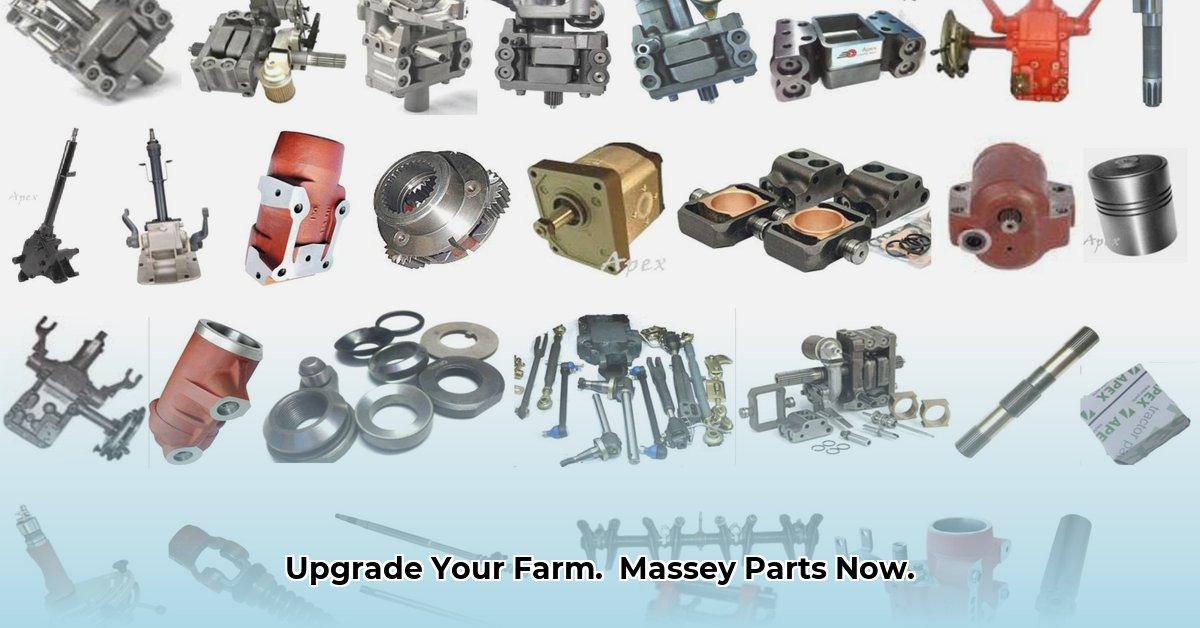
Farmers today face a dual challenge: maximizing productivity while minimizing environmental impact. Choosing the right tractor parts is a crucial step in achieving both. This guide focuses on Massey Ferguson tractor parts, exploring how genuine parts contribute to farm efficiency and sustainability. We'll delve into the benefits, address potential challenges, and provide a framework for making informed decisions. For more information on Massey Ferguson tractors, check out this useful resource.
The Power of Genuine Massey Ferguson Parts
Investing in genuine Massey Ferguson parts isn't just about fixing a problem; it's about optimizing your entire operation. Think of it as preventative maintenance on a high-performance machine. Just as you wouldn't use subpar components in a precision instrument, using genuine parts ensures your Massey Ferguson tractor operates at peak efficiency, minimizing costly downtime and maximizing its lifespan. This translates directly into higher yields and reduced operational expenses.
"Genuine Massey Ferguson parts ensure optimal performance and longevity, leading to significant cost savings over the life of the tractor," states Dr. Amelia Hernandez, Agricultural Engineering Professor at the University of California, Davis.
What are the tangible benefits? Genuine parts are manufactured to exacting standards using high-quality materials, resulting in enhanced durability and reliability. This reduces the frequency of breakdowns, and the associated costs of repair and lost productivity. The peace of mind this provides is invaluable in the demanding world of modern agriculture. AGCO Parts, the official supplier, guarantees the quality of their components.
Sustainability: A Key Consideration in Modern Farming
Sustainability is no longer a nice-to-have; it's a business imperative. Farmers are increasingly under pressure to reduce their environmental footprint while maintaining profitability. Using genuine Massey Ferguson parts contributes significantly to this goal. Extended equipment lifespan, resulting from proper maintenance with quality parts, directly reduces the need for frequent replacements, minimizing the environmental impact of manufacturing new tractors.
But sustainability extends beyond parts selection. Farmers can leverage several strategies to enhance their sustainability efforts:
- Fuel Efficiency: Implementing fuel-efficient farming practices.
- Alternative Fuels: Exploring options such as biodiesel or biofuels.
- Precision Agriculture: Utilizing technology for optimized resource management.
"The adoption of sustainable practices isn't just environmentally responsible; it also often translates to cost savings," adds Dr. Hernandez. Let's explore this further.
A Balanced Perspective: Stakeholder Considerations
The choice of tractor parts has far-reaching implications, influencing various stakeholders. Let's examine their short-term and long-term perspectives:
| Stakeholder | Short-Term Considerations | Long-Term Vision | Potential Challenges |
|---|---|---|---|
| Farmers | Increased efficiency, reduced downtime, lower repair costs. | Sustainable farming practices, optimized resource use. | Rising input costs, technological advancements. |
| Massey Ferguson/AGCO | Sales of high-quality parts, strong customer relationships. | Development of sustainable manufacturing processes, eco-friendly designs. | Competition, evolving market demands, supply chain disruptions. |
| Governments/NGOs | Supporting sustainable agriculture, environmental regulations. | Promotion of sustainable farming technologies and practices. | Balancing economic development with environmental protection. |
This interconnectedness highlights the importance of holistic decision-making.
Navigating Challenges: Risk Mitigation Strategies
While innovation offers immense advantages, potential risks must be carefully considered. Here's how to mitigate some key challenges:
| Risk Factor | Mitigation Strategies | Ongoing Research & Development |
|---|---|---|
| Dependence on fossil fuels | Transition towards alternative fuels; fuel-efficient farming practices. | Development of electric tractors and alternative power sources. |
| E-waste disposal | Responsible recycling programs; collaboration with sustainable recycling partners. | Development of biodegradable materials for tractor components. |
| Data security | Robust cybersecurity measures; regular software updates. | Advanced encryption and security protocols. |
| Supply chain disruptions | Diversified sourcing, strong supplier relationships. | Supply chain resilience through automation and diversification. |
Proactive planning is key to minimizing these risks.
Massey Ferguson's Emission Systems: A Detailed Look
Massey Ferguson stands out with its emissions control strategy, utilizing EGR, HPCR, DOCs, and SCR systems. This contrasts with many competitors who rely on DPFs, which require regular and expensive cleaning or replacement. Massey's approach promises significantly reduced maintenance and downtime.
However, long-term data on the lifespan of components like DOCs is crucial for a comprehensive lifecycle environmental impact assessment. Further research into the long-term reliability and durability, compared to DPF systems, is vital for informed decision-making.
How does this impact fuel efficiency? While the elimination of DPF regeneration indirectly improves fuel efficiency, quantifiable lifecycle fuel consumption data is still needed for a complete picture.
Step-by-Step Guide to Assessing Environmental Impact
Conducting a thorough assessment of the environmental impact of Massey Ferguson tractors requires a systematic approach:
- Calculate fuel consumption: Precisely monitor fuel usage under varied operating conditions.
- Assess downtime: Track instances of repair or maintenance needed for emission-related components.
- Compare to competitors: Analyze the cost and environmental impact of alternative emissions systems.
- Consider lifecycle costs: Factor in initial investment, maintenance, and potential replacements.
- Evaluate regulatory compliance: Ensure adherence to current and future emission standards.
This meticulous assessment is crucial for responsible agricultural practices.
Massey Ferguson Tractors: Weighing the Pros and Cons
| Feature | Pros | Cons |
|---|---|---|
| Emissions System | Reduced maintenance, lower operational costs, less downtime, potentially higher fuel efficiency | Requires long-term reliability data; potential impact of evolving emission standards |
| Cost | Significant short-term cost savings | Long-term cost competitiveness requires further analysis |
| Environmental Impact | Reduced emissions during operation due to less downtime and potentially higher fuel efficiency | Requires more data for a comprehensive lifecycle assessment |
By carefully considering these factors and using the provided framework, farmers can make informed decisions about Massey Ferguson tractor parts, optimizing both efficiency and sustainability. The future of farming depends on such responsible choices.